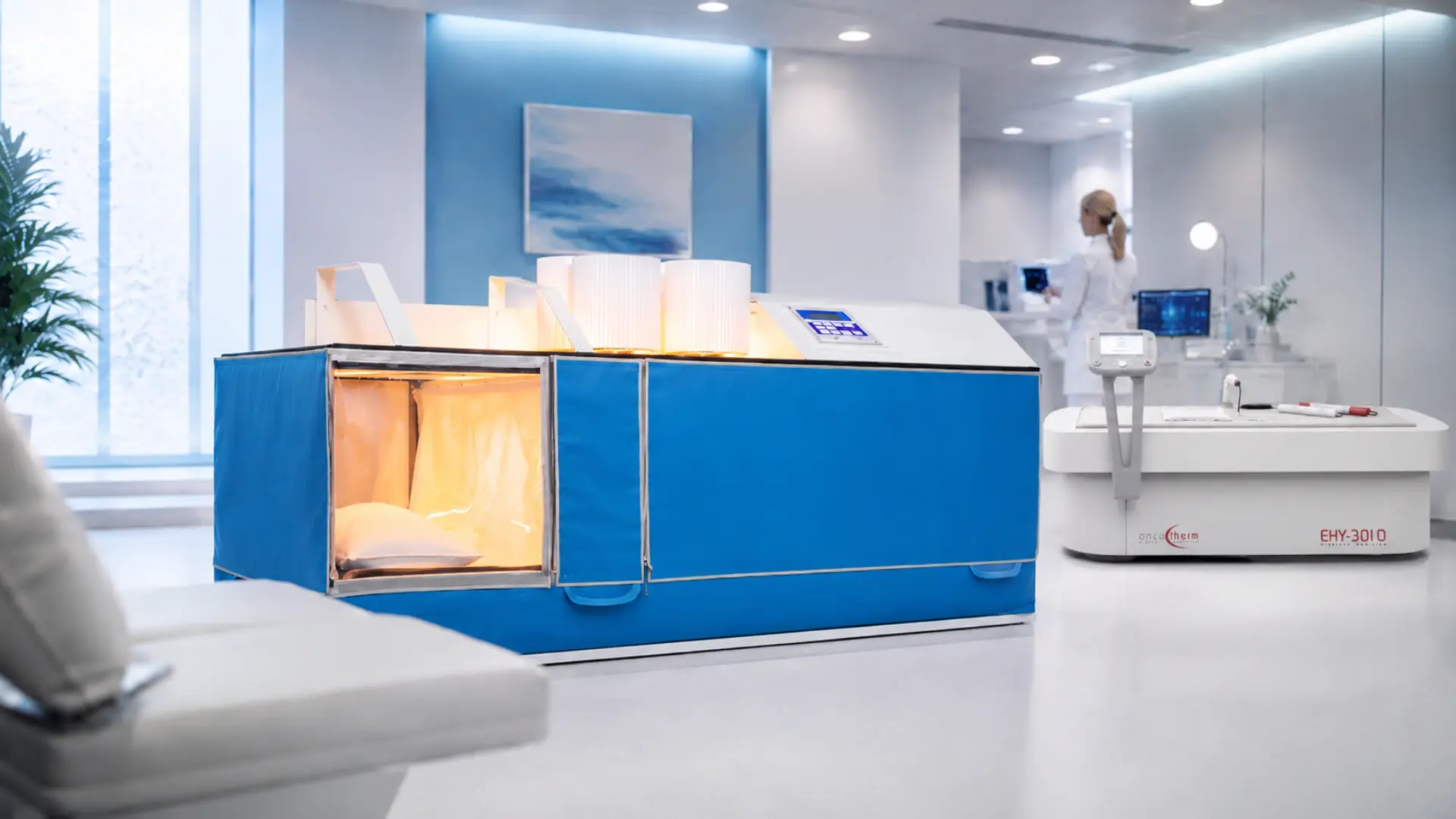
Hyperthermia
Hyperthermia is a complementary cancer treatment method based on the controlled heating of tumor tissue to 39-44 °C. Cancer cells are more sensitive to heat than healthy cells, and this sensitivity is used to increase the effectiveness of chemotherapy and radiotherapy. This page explains how hyperthermia works, which types exist and how it is applied at ONCOMSI.
İçindekiler
ToggleWhat Is Hyperthermia?
Hyperthermia is the oncologic application of thermotherapy, meaning “treatment with heat”. By heating the targeted tumor tissue or the whole body in a controlled way, it aims to weaken cancer cells biologically. It is different from hyperthermia in the sense of heat stroke: hyperthermia in cancer treatment is applied under physician supervision, with dedicated devices and within a measured temperature range.
Hyperthermia is not a cancer treatment on its own. It is applied as an evidence-based complementary protocol that increases the effectiveness of core treatments such as chemotherapy and radiotherapy. The NCI (National Cancer Institute) and academic reviews on NCBI Bookshelf document the synergy of hyperthermia with chemotherapy and radiotherapy.
The History and Scientific Background of Hyperthermia
The foundations of modern hyperthermia research were laid in the 19th century. In 1868, the German physician W. Busch observed that bacterial fever caused tumor regression in a patient with soft tissue sarcoma who had an erysipelas infection. In 1892, the American surgeon William B. Coley turned a similar observation into a systematic treatment approach and developed the mixed bacterial vaccine known as “Coley’s toxins”. The full story is told in Coley’s toxins and the history of hyperthermia.
Coley recorded that fever (39-40 °C) provided sustained immune activation and was a critical factor in tumor regression. The philosophical origin is even older: the Greek philosopher Parmenides is quoted as saying, “Give me the power to raise the body’s temperature and I will heal every disease.” Today, hyperthermia is recognized by several European cancer societies as a complementary arm of cancer treatment.
How Does Hyperthermia Work?
The effectiveness of hyperthermia comes from cancer cells being more sensitive to heat than healthy cells. Tumor tissue lives in a more acidic environment, with less oxygen and a chaotic blood vessel structure. These differences allow heat to act more strongly on cancer cells than on healthy tissue.
- Cell membrane permeability increases: Chemotherapy drugs penetrate the tumor more easily.
- Apoptosis is triggered: Cancer cells are directed toward programmed cell death.
- Heat shock proteins (HSP) are produced: Tumor antigens are presented to dendritic cells, strengthening the immune response.
- Blood flow and oxygenation increase: The effectiveness of radiotherapy rises.
- DNA repair is inhibited: The damage caused by chemotherapy and radiotherapy becomes lasting.
Types of Hyperthermia
Hyperthermia is applied in three main types depending on the treatment area: local, regional and whole-body hyperthermia. Which type is used is determined by the medical oncologist according to the tumor’s location, stage and the patient’s general condition. For a side-by-side comparison, see local vs whole-body hyperthermia.
| Type | Target Temperature | Treatment Area | Session Length |
|---|---|---|---|
| Local hyperthermia | 42-44 °C | Tumors close to the surface | 60 minutes |
| Regional (deep) hyperthermia | 42-44 °C | Pelvis, abdomen, organ tumors | 60 minutes |
| Whole-body hyperthermia | 38.5-40 °C | Widespread disease, immune activation | 3-4 hours |
Which Cancers Is Hyperthermia Used For?
Hyperthermia is used for solid tumors (tumors arising from organs); it has no routine role in blood cancers such as leukemia. At ONCOMSI, hyperthermia protocols are planned for the following tumors: Each tumor type is covered in which cancers hyperthermia is used for.
- Breast cancer (including local recurrence)
- Cervical cancer
- Rectal and colon cancer
- Pancreatic cancer
- Lung cancer (non-small cell)
- Liver tumors and liver metastases
- Head and neck tumors
- Soft tissue sarcoma
- Melanoma
- Prostate cancer
- Brain tumors and brain metastases
Combination With Chemotherapy and Radiotherapy
Hyperthermia is not applied on its own; it shows a synergistic effect together with chemotherapy and radiotherapy. Oxygenation and vascular permeability increase in the tumor area, and DNA repair enzymes are disabled by heat. The mechanisms are explained in hyperthermia with chemotherapy and radiotherapy.
- With radiotherapy: Oxygenation in the tumor increases; local hyperthermia applied in the first hours after radiotherapy is the strongest window of synergy.
- With chemotherapy: Drug concentration inside the tumor rises; a positive effect on drug resistance has been observed.
- With immunotherapy: Heat shock proteins make tumor antigens visible, and the immune response is strengthened.
The Treatment Process and Session Protocol
At ONCOMSI, hyperthermia treatment begins with an evaluation by the medical oncologist and is planned as 1-2 sessions per week, 6-12 sessions in total. The process follows these steps: Session planning is detailed in how many hyperthermia sessions are needed.
- Initial consultation: Medical history and reports are reviewed.
- Protocol planning: Local, regional or whole-body hyperthermia is chosen according to the cancer type.
- Preparation: A skin assessment is made and contraindications are checked.
- Session: Local/regional about 60 minutes, whole-body 3-4 hours. Vital signs are monitored continuously.
- Follow-up: Observation after the session, and the next session is planned.
Side Effects, Safety and Contraindications
When applied under physician supervision, hyperthermia is a generally well-tolerated method; side effects are largely temporary.
- Local/regional hyperthermia: Temporary skin redness, rarely a superficial burn, mild pain.
- Whole-body hyperthermia: Nausea, sweating, temporary fatigue, rarely diarrhea.
Contraindications:
- A pacemaker or implantable cardiac device
- A metal prosthesis in the treatment area
- Silicone implants (depending on the treatment area)
- Significantly impaired heat perception
- Uncontrolled cardiovascular disease
Hyperthermia at ONCOMSI: Equipment and Clinical Approach
ONCOMSI offers both local and whole-body hyperthermia at a single center in Istanbul, Turkey.
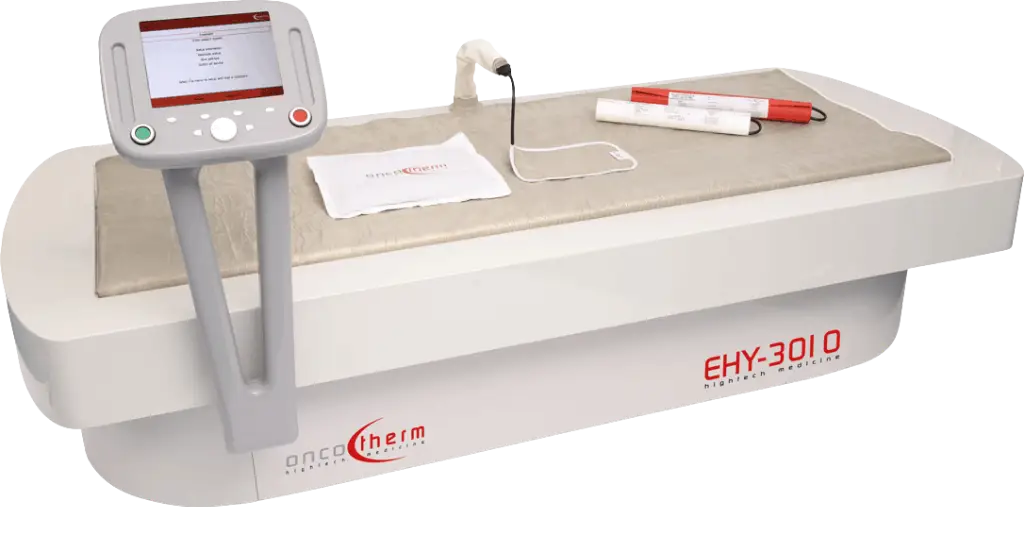
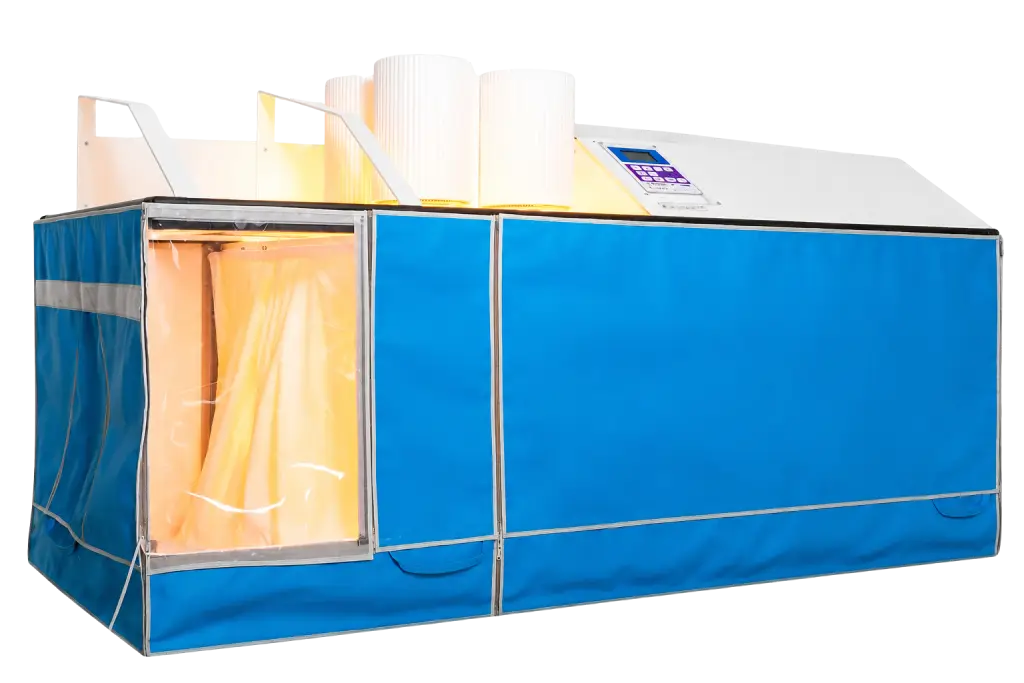
- Oncotherm EHY-3010ML: modulated electro-hyperthermia (mEHT) technology for local/regional hyperthermia, 13.56 MHz radiofrequency capacitive coupling.
- Heckel HT3000: water-filtered infrared-A (wIRA) system for whole-body hyperthermia, applied in the “fever range” of 38.5-40 °C.
Within ONCOMSI’s integrative oncology approach, hyperthermia is considered as part of a personalized protocol together with Metabolically Controlled Oncologic Therapy (MCOT), the ketogenic diet and hyperbaric oxygen therapy (HBOT). The treatment process is coordinated by medical oncologist Assoc. Prof. Mehmet Salih İyikesici, who has years of experience in the field, and our specialist team. Assoc. Prof. İyikesici trained in hyperthermia in Germany and Switzerland.
Scientific Evidence and Publications
Hyperthermia is a treatment method widely covered in the international scientific literature. The NCI’s treatment information page and the review by Baronzio et al. on NCBI Bookshelf document in detail the interaction of hyperthermia with the immune system, tumor antigen presentation via heat shock proteins, and its synergy with chemotherapy and radiotherapy.
Studies by Assoc. Prof. Mehmet Salih İyikesici published in international peer-reviewed journals present clinical observations of the MCOT and hyperthermia combination in different cancer types, most recently in Current Oncology in 2026 (İyikesici MS. Curr Oncol. 2026;33(8):489. PMID 42645394). The list of publications is available in the Academic Publications section.
Hyperthermia Treatment in Turkey and the International Patient Journey
ONCOMSI is an international medical oncology center based in Istanbul, Turkey. Hyperthermia treatment is available to patients from within Turkey and from abroad. For the step-by-step process, see hyperthermia treatment in Turkey.
- File review and video consultation before treatment
- Easy access to Istanbul; airport transfer support
- Session planning integrated with the chemotherapy/radiotherapy schedule
- Multilingual support: Turkish, English, Arabic, Russian
- Long-term follow-up program
Frequently Asked Questions
What is hyperthermia?
Hyperthermia is a complementary cancer treatment method based on the controlled heating of tumor tissue to 39-44 °C. It is used to increase the effectiveness of chemotherapy and radiotherapy.
How does hyperthermia increase the effect of chemotherapy and radiotherapy?
Blood flow and oxygenation increase in the tumor area, cell membrane permeability rises and DNA repair enzymes are disabled. These mechanisms strengthen the effectiveness of standard treatments.
How does hyperthermia affect the immune system?
Heat shock proteins produced under heat stress present tumor antigens to dendritic cells. The migration of natural killer cells and T cells to the tumor area increases.
How many hyperthermia sessions are needed?
A program of 1-2 sessions per week, 6-12 sessions in total, is generally preferred. The exact number is determined by the medical oncologist’s evaluation.
How long does a hyperthermia session last?
A local or regional hyperthermia session lasts about 60 minutes. In whole-body hyperthermia, including the time needed to reach the target core body temperature, a session lasts about 3-4 hours.
Is hyperthermia painful?
Patients usually describe a feeling of gentle warmth in the treatment area. Thanks to the surface cooling systems in the devices, a burning sensation on the skin is rare.
Which devices are used for hyperthermia treatment?
At ONCOMSI, local/regional hyperthermia is applied with the Oncotherm EHY-3010ML mEHT system and whole-body hyperthermia with the Heckel HT3000 wIRA system.
Does hyperthermia damage healthy tissue?
Cancer cells are more sensitive to heat than healthy cells. Modern devices concentrate energy in the tumor area while protecting the skin surface with active cooling, significantly reducing the risk of damage to healthy tissue.
Is hyperthermia enough on its own to treat cancer?
Hyperthermia is not recommended as a cancer treatment on its own. It is applied as a complementary method that increases the effectiveness of chemotherapy, radiotherapy and other oncologic treatments.
This page is for informational purposes only. Please consult your doctor for diagnosis, treatment, and personal health decisions.