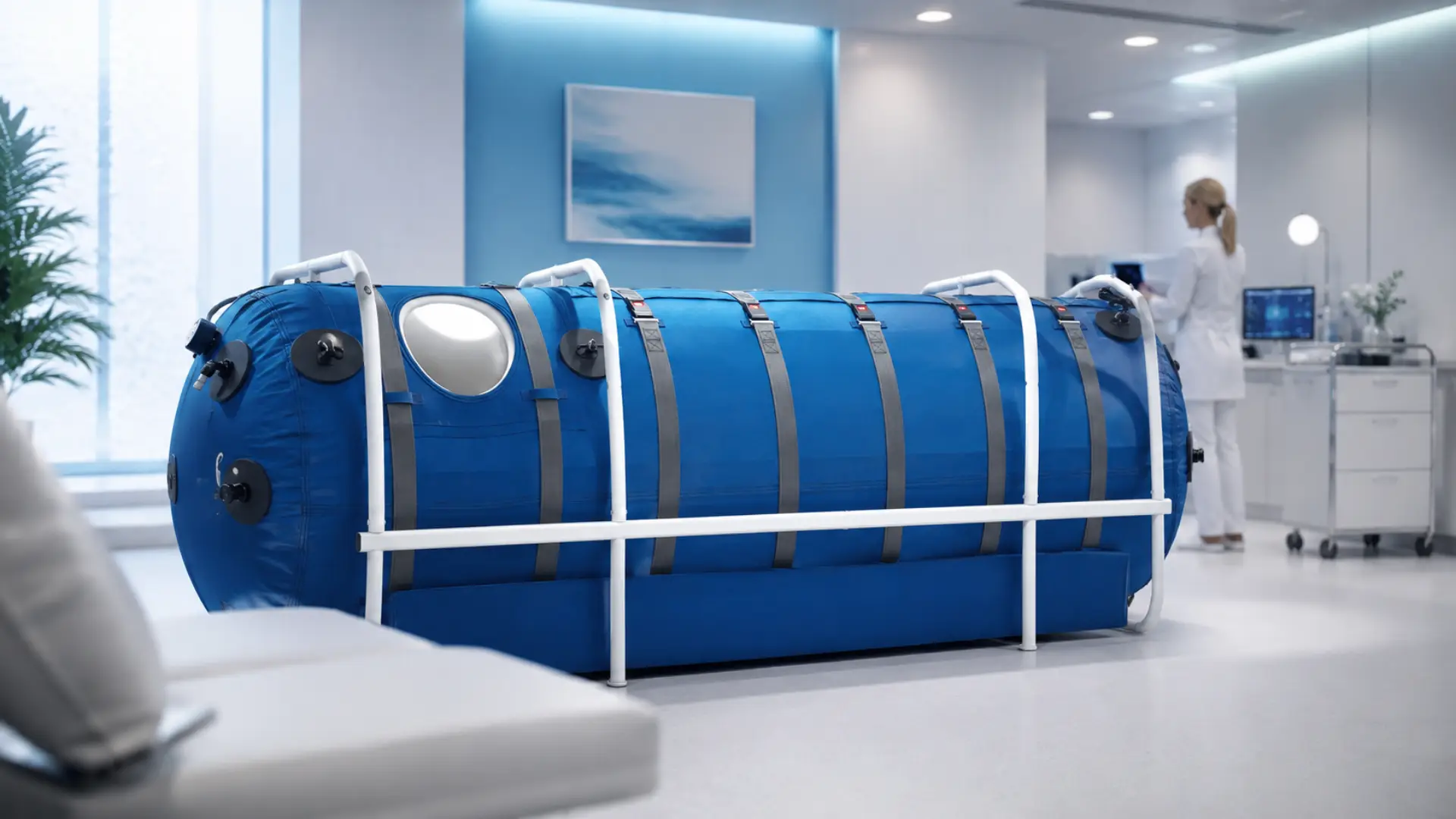
Hyperbaric Oxygen Therapy (HBOT)
Hyperbaric oxygen therapy (HBOT) is an evidence-based treatment method in which the patient breathes 100% pure oxygen inside a sealed pressure chamber at pressures above normal atmospheric pressure, increasing the amount of oxygen dissolved in the blood and tissues. In oncology, HBOT is not a cancer treatment on its own; it is a component that supports standard approaches such as chemotherapy and radiotherapy, improves tissue oxygenation and helps ease treatment-related complications.
İçindekiler
ToggleWhat Is Hyperbaric Oxygen Therapy?
HBOT is based on placing the patient in a pressure chamber, raising the ambient pressure in a controlled way and having the patient breathe 100% oxygen at the same time. Normal air contains 21% oxygen; during HBOT this rises to 100%, and the applied pressure markedly increases the amount of oxygen dissolved in the plasma. This allows oxygen to reach tissues without depending on hemoglobin.
The treatment is delivered by specialists in undersea and hyperbaric medicine together with multidisciplinary teams. In the oncology setting, the person who leads the process is the medical oncologist, who decides on the order and timing of components such as chemotherapy, hyperthermia, the ketogenic diet and HBOT.
How Does It Work? The Mechanism
HBOT supports tissue oxygenation independently of hemoglobin by increasing the oxygen dissolved in the plasma, and by reducing hypoxia in the tumor microenvironment it may sensitize tumors to radiotherapy and some chemotherapies. Its effects work through several interrelated mechanisms:
- Increased tissue oxygenation: Oxygen reaches hypoxic areas.
- Reduced swelling and inflammation: Provides clinical benefit in late tissue damage after radiotherapy.
- Support for new blood vessel and connective tissue formation: Wound healing and bone integrity are accelerated.
- Antibacterial support: The growth of anaerobic bacteria is inhibited and antibiotic effectiveness increases.
- Production of reactive oxygen species (ROS): Is intended to act as a sensitizer by creating selective oxidative stress in the tumor microenvironment.
A review published by Moen and Stuhr in Targeted Oncology in 2012 reported no meaningful evidence that HBOT promotes tumor growth, and noted inhibitory trends in some tumor types such as breast cancer and glioma.
Who Is It For? Indications
HBOT has 10 main widely accepted indications:
- Decompression sickness (“the bends”)
- Carbon monoxide poisoning
- Air and gas embolism
- Gas gangrene and serious soft tissue infections
- Acute crush injuries
- Slow-healing chronic wounds such as diabetic foot
- Burns (severe and extensive)
- Late tissue damage after radiotherapy (osteoradionecrosis)
- Compromised skin grafts or flaps
- Sudden hearing loss or sudden vision loss (in selected patients)
In oncology, the uses of HBOT with the strongest body of evidence are managing radiotherapy complications and supporting wound healing after surgery.
Who Should Not Have It? Contraindications
- Undrained pneumothorax (absolute contraindication)
- Active, uncontrolled upper respiratory tract infection
- Recent ear or chest surgery
- Febrile illness and advanced, uncontrolled lung disease
- Recent administration of certain chemotherapy drugs (timing is planned with the medical oncologist)
For side effects, contraindications and preparation in detail, see HBOT side effects and safety.
Hyperbaric Oxygen Therapy and Cancer
HBOT does not cure cancer on its own; a “cure” claim is not scientifically supported. Current evidence positions HBOT as a supportive component that may support the effectiveness of standard treatments and can be used in managing complications.
Does HBOT Make Cancer Grow?
No. The current scientific literature offers no meaningful evidence that HBOT increases malignant growth or recurrence. A comprehensive review published by Feldmeier and colleagues in Undersea and Hyperbaric Medicine in 2003 concluded that “the published literature provides no basis for the claim that HBO2 increases malignant growth or metastasis” and that “a history of malignancy should not be considered a contraindication to HBO2.” The 2012 Moen-Stuhr review confirms this conclusion. For the full safety discussion, see Does HBOT make cancer grow?
Synergy With Metabolically Controlled Oncologic Therapy (MCOT)
What sets ONCOMSI apart globally is that HBOT is applied within a structured protocol together with Metabolically Controlled Oncologic Therapy (MCOT), hyperthermia and the ketogenic diet. HBOT was an integral component of the protocol in the clinical studies by Assoc. Prof. Mehmet Salih İyikesici published in Cureus (2017 and 2021), Nigerian Journal of Clinical Practice (2020), Archives of Clinical and Experimental Medicine (2020), Complementary Medicine Research (Karger, 2020) and International Journal of Hyperthermia (2019). In the most recent publication, a 2026 case report (İyikesici MS. Curr Oncol. 2026;33(8):489. PMID 42645394), HBOT at 1.5 atmospheres was applied on three consecutive days in each chemotherapy cycle throughout all treatment phases. For how the components are combined, see MCOT and HBOT: an integrative oncology approach.
In the preclinical literature, Poff and colleagues reported in PLOS ONE in 2013 that combining the ketogenic diet with HBOT extended mean survival by 77.9% in a model of systemic metastatic cancer. A follow-up study in 2015 reported that the combination of diet + ketone supplementation + HBOT led to subjects living roughly twice as long as controls.
Managing Radiotherapy Complications
The use of HBOT with the strongest body of evidence in oncology is treating late radiation damage. In conditions such as osteoradionecrosis in the head and neck region, soft tissue damage after pelvic radiotherapy, and bladder or bowel complaints, HBOT is considered an evidence-based approach.
How Is the Treatment Delivered?
At ONCOMSI, HBOT is delivered with a single-person (monoplace) Quamvis 320 (OxyHealth, USA) hyperbaric chamber. This system, which was also used in the clinical studies by Assoc. Prof. Mehmet Salih İyikesici published in international peer-reviewed journals, is equipped for a working pressure of 1.5 atmospheres and a 60-minute session protocol.
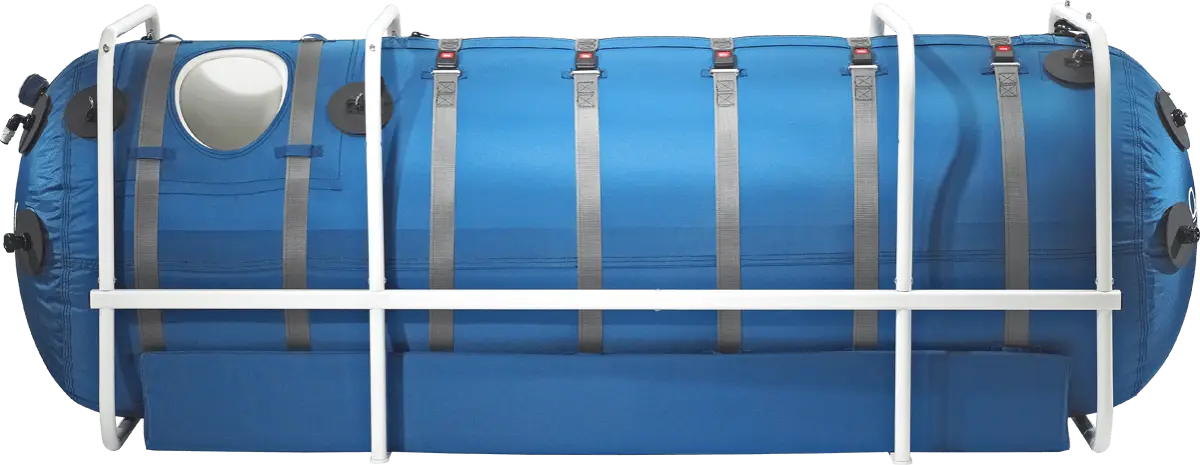
Features of the Quamvis 320 Monoplace Chamber
- Single-person (monoplace): The patient enters the chamber alone and stays in an isolated space during treatment.
- Spacious interior: 81 cm (32 in) internal diameter × 254 cm (100 in) length; suitable for lying down comfortably.
- Continuous visual and audio contact: Through transparent viewing panels and an intercom system, the team monitors the patient throughout the session.
- Dual-redundant safety: Tamper-proof pressure regulators and a ballistic nylon outer shell provide structural durability.
- Intermittent oxygen breathing: 100% pure oxygen is given by mask in an intermittent protocol.
- Rapid exit: In an emergency, the patient can be brought out in a controlled way within minutes.
Before Treatment
- An examination by an undersea and hyperbaric medicine specialist is carried out.
- A chest X-ray and, when needed, ENT or cardiology assessment are obtained.
- Accompanying conditions and current medications are reviewed.
- For oncology patients, timing is planned with the medical oncologist.
Session Length and Number
A standard HBOT session lasts 90 to 120 minutes, including pressurization and decompression. In emergency indications such as decompression sickness it may be longer. In the MCOT protocol described in Assoc. Prof. İyikesici’s publications, sessions lasted about 60 minutes at 1.5 atmospheres. The total number of sessions depends on the indication: from a few sessions up to plans exceeding 40 sessions for chronic radiation damage or slow-healing wounds. In oncology protocols, the number of sessions is set according to the chemotherapy/radiotherapy schedule and the patient’s clinical response. For planning details, see how many HBOT sessions are needed.
Side Effects and Safety
When delivered with modern equipment and specialist monitoring, HBOT is considered a safe method. The most common effects are temporary ear discomfort related to pressure change.
- Common: Middle ear barotrauma: mild and resolves on its own.
- Less common: Temporary myopia: improves after treatment.
- Rare: Sinus barotrauma, a claustrophobic episode, mild fatigue.
- Very rare: Oxygen toxicity seizure, pneumothorax.
In the study of advanced rectal cancer by Assoc. Prof. İyikesici (İyikesici MS. Arch Clin Exp Med. 2020;5(1):16-20), the only HBOT-related effect reported was mild ear pain, occurring rarely and resolving on its own within a few hours. The study of advanced gastric cancer (İyikesici MS. Niger J Clin Pract. 2020;23(5):734-740) likewise reported that HBOT given together with MCOT added no toxicity to the protocol.
Hyperbaric Oxygen Therapy at ONCOMSI
ONCOMSI is an international medical oncology center based in Istanbul, Turkey. At our center HBOT is not a stand-alone service; it is part of an integrative protocol together with metabolically controlled oncologic therapy, hyperthermia and the ketogenic diet.
- Initial consultation: Pathology, imaging and laboratory results are reviewed.
- Multidisciplinary planning: The order of components is set under the coordination of the medical oncologist.
- Treatment period: Sessions are carried out under close monitoring.
- Follow-up program: Long-term monitoring, nutrition and psycho-oncology support continue.
Our center in Istanbul serves patients from across Turkey and from abroad. For travel and the patient journey, see hyperbaric oxygen therapy in Turkey.
Frequently Asked Questions
What is hyperbaric oxygen therapy?
It is an evidence-based treatment method in which the patient breathes 100% pure oxygen inside a sealed pressure chamber at pressures above atmospheric pressure, increasing the oxygen dissolved in the blood and tissues.
Does hyperbaric oxygen therapy make cancer grow?
No. The comprehensive Feldmeier 2003 review and the Moen-Stuhr 2012 review report no meaningful evidence that HBOT increases malignant growth or recurrence.
Does HBOT cure cancer?
No. HBOT is not a cancer treatment on its own. It is a supportive component that may sensitize tumors to standard treatments and help manage complications.
How long does an HBOT session last?
A standard HBOT session lasts 90 to 120 minutes. In emergency indications such as decompression sickness it may be longer. In the published MCOT protocol, sessions lasted about 60 minutes at 1.5 atmospheres.
What are the side effects of hyperbaric oxygen therapy?
The most common side effect is middle ear barotrauma, which is mild and resolves on its own. Temporary myopia, sinus pressure and claustrophobic episodes are less common. Oxygen toxicity seizures and pneumothorax are very rare.
Who should not have HBOT?
The main situations in which HBOT is not recommended are undrained pneumothorax, uncontrolled upper respiratory tract infection, recent ear or chest surgery and some advanced lung diseases.
Which specialist delivers HBOT?
The treatment is delivered by a specialist in undersea and hyperbaric medicine. In the oncology setting, the patient’s overall treatment protocol is led by the medical oncologist.
I have claustrophobia. Can I still have treatment?
In most cases, yes. The Quamvis 320 monoplace chamber, with its transparent viewing panels and continuous visual and audio contact, markedly reduces claustrophobic complaints.
How can I find out the cost of treatment?
Because the treatment plan is personal, cost is discussed after your medical records are reviewed. Please contact us for information.
Where is HBOT available in Istanbul?
In Istanbul, HBOT is offered by university hospitals, large private hospitals and centers specializing in hyperbaric medicine. When choosing a center in an oncology setting, important criteria are the type of chamber, the experience of the treating physician and whether the process is coordinated by a medical oncologist.
Appointments and Contact
Only an in-person medical assessment can determine whether hyperbaric oxygen therapy is suitable in your case. At ONCOMSI, HBOT is not planned on its own; it is planned within an integrative protocol together with Metabolically Controlled Oncologic Therapy (MCOT), hyperthermia and the ketogenic diet, under the coordination of the medical oncologist. The ONCOMSI team assesses you and your loved ones at our center in Istanbul without leaving you alone at any stage. To create a treatment plan suited to you, get in touch to request an appointment.
This page is for informational purposes only. Please consult your doctor for diagnosis, treatment, and personal health decisions.